

Hey there, tennis enthusiasts! As a handle grip supplier, I've seen firsthand the impact that the right grip can have on your tennis game. Today, I'm gonna dive into the world of tennis racket handle grips and figure out what the best one is for you.
The Importance of a Good Handle Grip
First off, let's talk about why a good handle grip is so crucial. When you're out on the court, your grip is the only connection between you and your racket. It affects everything from your control over the ball to your ability to generate power. A proper grip can reduce the risk of injuries, like tennis elbow, by absorbing shock and providing better support.
Imagine trying to play tennis with a slippery or uncomfortable grip. You'd constantly be adjusting your hold, which would throw off your timing and accuracy. On the flip side, a well - chosen grip can give you the confidence to swing freely and hit those winning shots.
Types of Tennis Racket Handle Grips
There are several types of handle grips available in the market, each with its own unique features.
Overgrips
Overgrips are the most popular type of grip among tennis players. They're thin, lightweight, and easy to install. You simply wrap them over the existing grip on your racket. Overgrips come in a variety of materials, such as synthetic leather, microfiber, and felt.
Synthetic leather overgrips offer a great combination of durability and comfort. They provide a tacky surface that gives you a firm hold on the racket, even when your hands get sweaty. Microfiber overgrips are known for their softness and absorbency. They can soak up sweat quickly, keeping your hands dry and your grip secure. Felt overgrips are often used by players who prefer a more traditional feel. They offer a smooth surface and a bit of extra cushioning.
If you're a player who sweats a lot, I'd recommend checking out a high - absorbency microfiber overgrip. It'll keep your hands dry and your grip tight throughout the match. For those who like a more luxurious feel, a synthetic leather overgrip might be the way to go.
Replacement Grips
Replacement grips are a more permanent solution. Instead of wrapping an overgrip over the existing grip, you remove the old grip and replace it with a new one. Replacement grips are usually thicker and more cushioned than overgrips.
They come in different sizes to fit different racket handles. If you have a larger hand, you might want to choose a thicker replacement grip for a more comfortable hold. On the other hand, if you have a smaller hand, a thinner grip could give you better control.
One thing to note about replacement grips is that they take a bit more time and skill to install compared to overgrips. But once they're on, they can last for a long time.
Hybrid Grips
Hybrid grips combine the features of overgrips and replacement grips. They're designed to offer the best of both worlds. Some hybrid grips have a cushioned base layer like a replacement grip, with a tacky outer layer like an overgrip.
These grips are great for players who want the comfort of a replacement grip and the added tackiness of an overgrip. They can also be a good option if you're not sure whether you prefer an overgrip or a replacement grip.
Factors to Consider When Choosing a Handle Grip
Now that you know about the different types of grips, let's talk about the factors you should consider when choosing the best one for you.
Comfort
Comfort is key when it comes to choosing a handle grip. You'll be holding your racket for long periods of time, so you want a grip that feels good in your hand. Consider the material, thickness, and texture of the grip.
If you have sensitive hands, a soft and cushioned grip might be more comfortable for you. On the other hand, if you prefer a firmer feel, a thinner grip could be the better choice.
Sweat Absorption
Sweating is a natural part of playing tennis, especially during intense matches. A grip that can absorb sweat effectively is essential. Look for grips made from absorbent materials like microfiber or felt.
Some grips also have special sweat - wicking technologies that help keep your hands dry. This can prevent your grip from slipping and improve your control over the racket.
Durability
You don't want to be replacing your grip after every few matches. A durable grip can save you time and money in the long run. Synthetic leather overgrips and high - quality replacement grips tend to be more durable than other types of grips.
Check the product reviews and ratings to get an idea of how long a particular grip will last. Also, consider how often you play tennis. If you play frequently, you'll need a more durable grip.

Tackiness
The tackiness of a grip affects how well you can hold the racket. A tacky grip gives you a firm hold, even when your hands are sweaty. Overgrips are generally more tacky than replacement grips, but there are also tacky replacement grips available.
Some grips have a sticky surface right out of the package, while others need to be broken in a bit to develop their tackiness.
Our Handle Grip Offerings
As a handle grip supplier, we offer a wide range of high - quality grips to suit every player's needs. Whether you're a beginner or a professional, we have the perfect grip for you.
Our overgrips come in different materials and colors, so you can choose the one that looks and feels the best. We also have replacement grips in various sizes and thicknesses. And if you're interested in a hybrid grip, we've got those too.
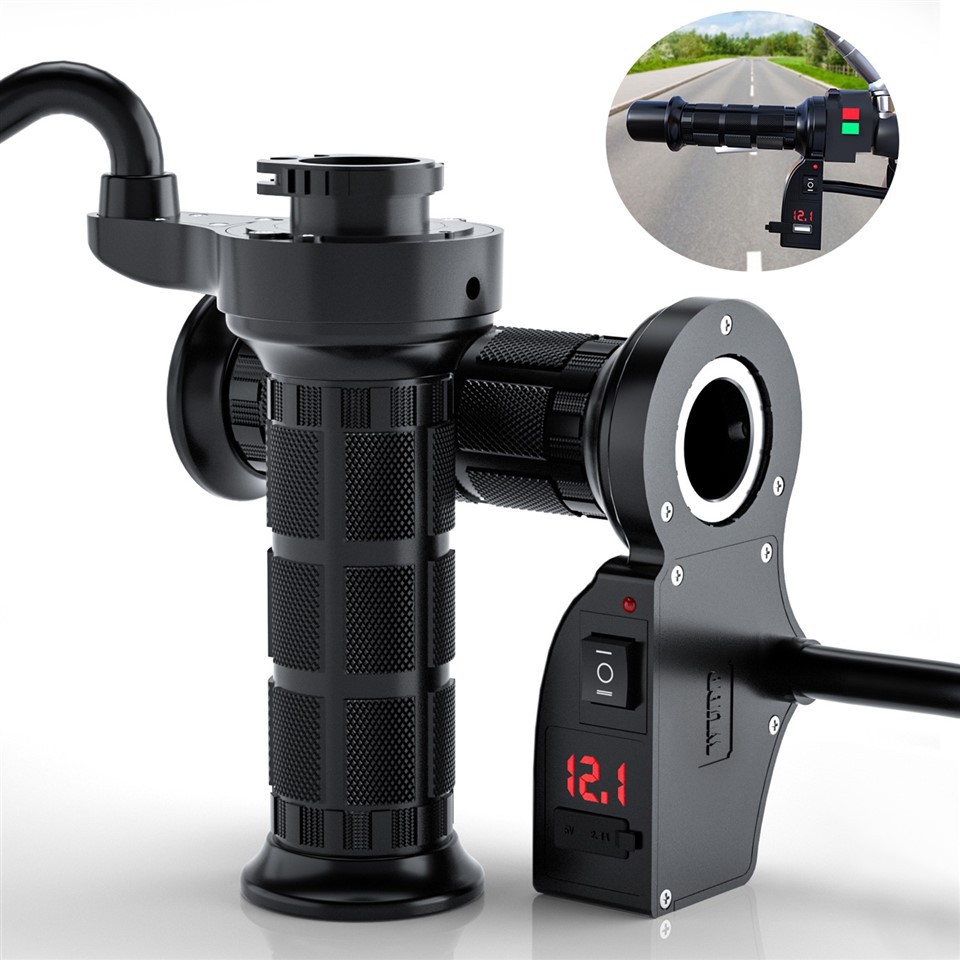
In addition to tennis racket handle grips, we also supply other types of handle grips. For example, if you're into motorcycles, you might be interested in our Motorcycle Heated Grips Moped Warmer Adjustable. These grips are adjustable and can keep your hands warm in cold weather.
We also have High And Low Temperature Motorcycle Handle Warmer, which is great for riders who face different temperature conditions. And for electric bike and scooter users, our Electric Bike Heating Grips Waterproof Scooter Heated Warm can provide a warm and comfortable ride.
How to Install a Handle Grip
Installing a handle grip is not as difficult as it might seem. For overgrips, start by removing the old overgrip (if there is one). Then, align the starting end of the new overgrip with the bottom of the racket handle. Wrap the overgrip tightly around the handle, overlapping each layer slightly.
For replacement grips, you'll need to remove the old grip first. This can be a bit tricky, but with a little patience, you can do it. Once the old grip is off, clean the handle and apply some grip tape or adhesive. Then, carefully wrap the new replacement grip around the handle, starting from the bottom.
Conclusion
Choosing the best handle grip for your tennis racket is a personal decision. It depends on your playing style, hand size, and personal preferences. Consider the factors we've discussed, such as comfort, sweat absorption, durability, and tackiness.
As a handle grip supplier, we're here to help you find the perfect grip for your needs. If you're interested in our products or have any questions, don't hesitate to reach out to us for a procurement discussion. We're looking forward to working with you to improve your tennis game.
References
- "The Ultimate Guide to Tennis Racket Grips" - Tennis World Magazine
- "How to Choose the Right Tennis Racket Grip" - Tennis Today Blog


