

Handle Grip
What is Handle Grip
Motorcycle handle grip on a motorcycle are an important part of its ergonomics. The shape and grip position of motorcycle handlebars plays a crucial role in defining your riding position on a motorcycle. This in turn also defines a motorcycle’s character in the way it turns around corners, the kind of effort required to put in by the rider, as well as the comfort on offer. A handlebar also adds enormously to a motorcycle’s visual appeal.
Advantages of Handle Grip
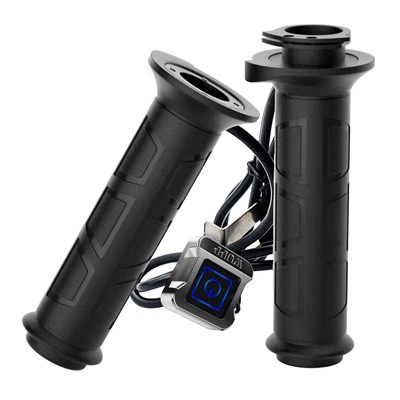
Premium Materials: Crafted with a blend of high-quality aluminum and rubber, these handle grips offer the perfect balance of strength and comfort. The aluminum core ensures durability, while the rubber exterior provides a non-slip surface for a secure handle grip in all riding conditions.
Universal Fit: Designed to fit most motorcycles, these handle grips boast a universal compatibility that makes them a versatile choice for riders of various makes and models. Whether you're cruising on a sportbike, cruiser, or touring motorcycle, these handle grips are the ideal upgrade.
Enhanced Handle Grip: The non-slip rubber surface maximizes your control over the handlebars, providing a secure handle grip even in wet or challenging weather conditions. This feature is especially crucial for riders who prioritize safety and precision in their handling.
Easy Installation: Installing these handle grips is a breeze, making them a convenient choice for riders who prefer a hassle-free upgrade. The pack includes two handle grips, allowing for quick and straightforward installation on both handlebars.




Why Choose Us
Factory
With our excellent manufacturing technology and strict quality management system, our products enjoy a good reputation in the market. We focus on technological innovation and product development to continuously improve the quality and performance of our products to meet the needs and expectations of our customers.
Quality Assurance
We have always been committed to providing our customers with the assurance of high quality and efficiency to meet their needs and expectations for our products and services.
Produced Products
We mainly productsis full body fairing partsfor scooter motorcycle(mainly HONDA/YAMAHA),and OEM quality enginparts for scootermotorcycle &ATV,UTV.
Superior Service
We have always been committed to providing excellent service and offering all-round support and assistance to our customers.
Motorcycle Handle Grip Type
There are mainly two types

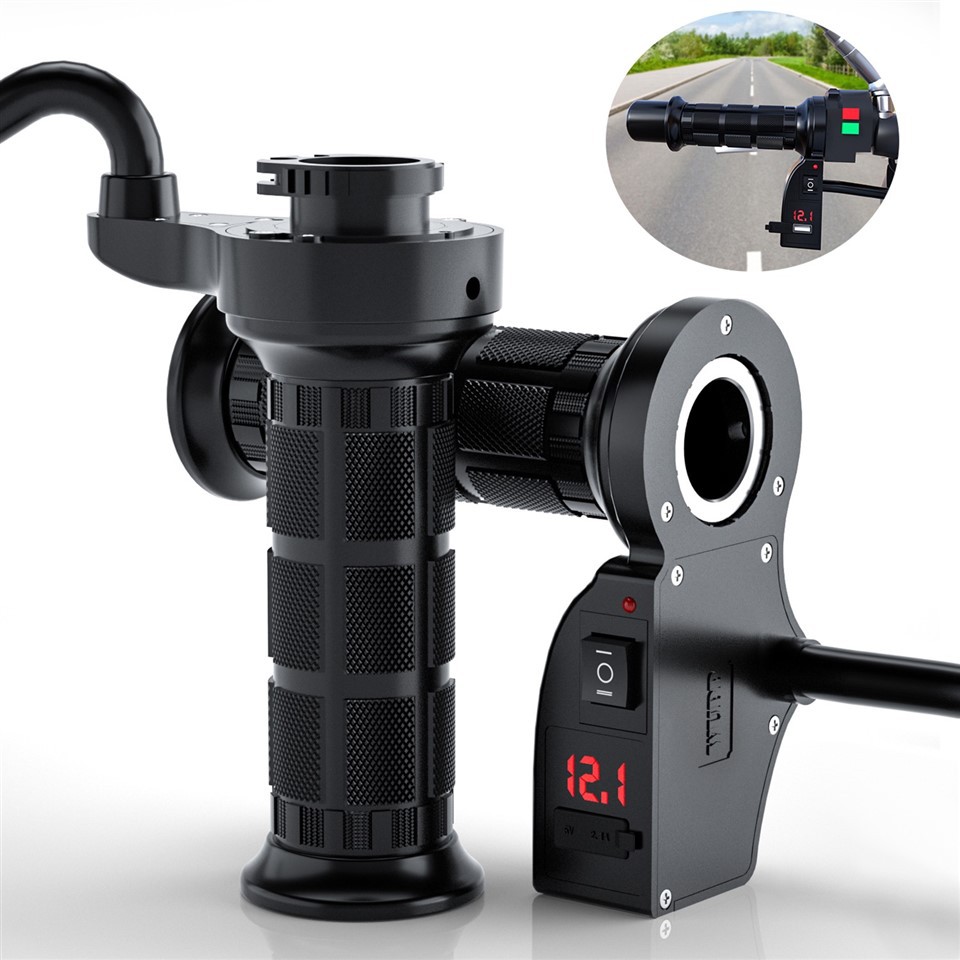

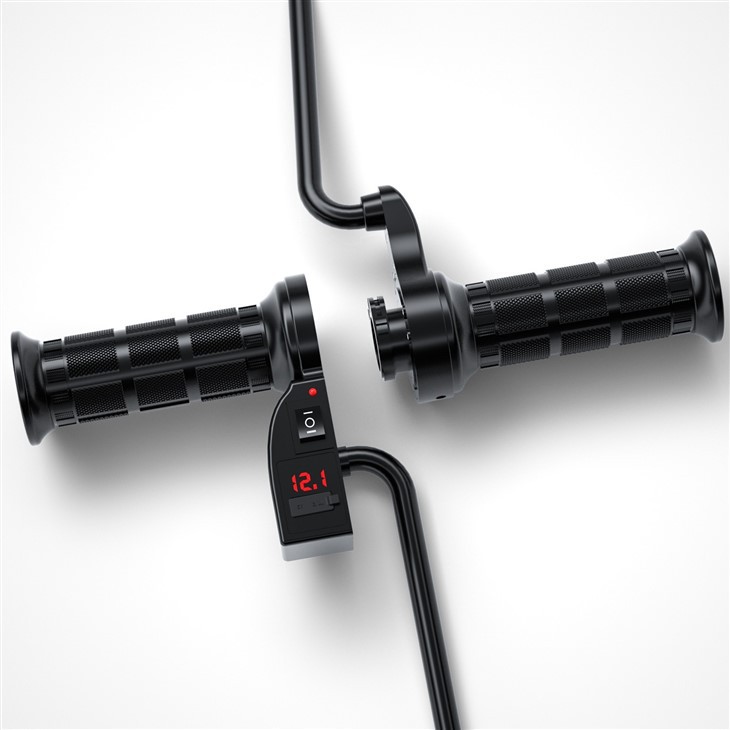
With gas rod included.
The gas rod is the mechanism that stretches the throttle cable, and therefore accelerates your motorcycle . If you only change the tires, it implies that you are leaving the stock reed of the motorcycle .
The most common is that the grips come without the gas rod, for example the typical grips that are completely made of rubber:
Normally this type of grips come with adapters included, so that they can be mounted on most motorcycles. Even so, it is important to take this into account, as choosing the wrong type will make the process more difficult than it should be, and you may not be able to mount it on your motorcycle .
Attention: If your motorcycle uses the "Ride by wire" gas system, you will not be able to mount grips with gas rod, since your motorcycle does not have a conventional rod with cable, but it is an electronic gas. In this case, you will only be able to mount grips without a throttle rod.
Open or closed end
There are two types of grips on the market, with open or closed end.
In the open end ones the cuff is shaped like a hollow cylinder inside and open at both ends, while in the closed end ones they are covered on the side where the counterweight goes.
The closed end ones are useful in case you do not want to mount counterweights, which we do not recommend at all because of the role they play in stabilizing the handlebar.
But it can also be the case of motorcycles or scooters that come standard without counterweights (or these are inside the handlebar), in that case you should choose grips with closed end.
Cost
Handlebar grips vary in price, depending on a multitude of factors. From material, shape, functionality and purpose, there are different options based on preferences.
Performance
When choosing a motorcycle grip, it's important you remember functionality beats style. Some grips focus more on trendy patterns, colours and designs as opposed to reliable, functioning grips.
Due to grips being so integral to the steering, balance and control of a motorcycle, having grips that meet your performance needs is vital.
This is particularly important for anyone wanting to race, whereby milliseconds could be all the difference between winning and losing. Having trusted grips in these scenarios goes without saying.
Purpose
Different grips will lend themselves better depending on factors such as the type of bike you have what you use it for.
You'll also find not all handlebar grips are universal, so you must make sure you find one that can fit on your bike.
For example, if you enjoy dirt bike racing, the best grip for this is going to differ from someone who wants to ride around . The way these 2 types of bikes ride and operate will impact the type of grip required. Big heavy bikes are likely to require more cushioning due to the vibrations, whereas a dirt bike racer may want to feel every subtle bump to react quickly to the conditions.
For the everyday motorcycle owner, you may find having a selection of grips is useful for different scenarios or conditions. You may find in colder months or when its raining, you actually prefer the feel and comfort of a different grip.
Personal Preference
At the end of the day, personal preference is likely to dictate what your favourite type of grip is. You'll find positive reviews for all sorts of handlebar grips so many of the final buying decisions come down to personal preferences.
Some grips are an even width the whole length, while others may bulge in the middle to reflect the shape of the palm.
Some people prefer thick grips while others prefer thinner grips. Those with smaller hands may find a thinner grip is more comfortable, whilst those with bigger hands may find a thicker grip is more comfortable. The length of riding may also impact your overall preferences. If you're gripping a handlebar for hours, compared to a few minutes, this impact what type of grip you'd prefer.
How To Measure Motorcycle Handle Grip
Measuring the handle
If you're thinking about replacing your motorcycle handle, you need to learn how to measure them.
It's pretty simple, actually. Motorcycle riders are familiar with the diameter, where most handle are either 1 inch or 7/8 inches. Then, you need to consider the measurement of the riser spacing. Riser spacing is the area between the handle clamps. You will find this easy because they are the textured areas on the bars.
Other handlebar measures will include the following:
Total width: The distance from end to end.
Pullback: The distance from the mount of the grip end.
Total Rise: The pinnacle of the handlebars
End Rise: The height of the grip
Center Width: The distance where the bar starts to bend
When choosing the right handlebar for your motorcycle, you need to ask yourself a few basic questions.
Measuring The Rise
You can determine how high your handlebars rise by looking at how far they are from where your hands rest. The best way to measure the Rise is to put it on a flat surface against the wall and measure it from the bottom up. The standard is 6 1/4 inches.
Measuring the Center width
The center width is the measurement at the bottom of the bar where it clamps into the riser, right before the bend starts. This measurement is critical because some bike models wrapped in fairings can only accommodate a center bar width.
Measuring the Pullback
Finally, when measuring the pullback, think about a straight line across the front of the handlebars, then measure from that line to the tip of the handlebar; you have the pullback. If you are short in stature, this measurement is critical if you want a comfortable ride.
How to Install Motorcycle Handle Grip
Removing the Old Grips
Remove the bar ends. These are the metal pieces on the outside ends of the handlebars. Depending on the model of your motorcycle, you can either pop them off or unscrew them with a flathead screwdriver.
Cut off the grips. Use a razor blade or a hacksaw to cut the grips lengthwise and pull them off of the handlebars. As you're cutting, apply enough pressure to slice through the grip, but not so much that you scratch the metal handlebar beneath it.
Be careful not to cut through any wires on the handlebar. Take your time when you're slicing off the grips.
If you want to save the grips, you can blow them off with compressed air. Most people don't have compressed air available at home, so you'll likely have to take your motorcycle to a mechanic to have this done.
Another method to try for saving the grips is slipping a flathead screwdriver between the grip and the handlebar and using it to work the grip off. If there's a lot of adhesive holding the grip in place, this method is difficult.
If you have chrome grips, skip the razor blade and simply unscrew the bolts at the ends of the grips and slide them off.
Clean the handlebars. Use rubbing alcohol or adhesive remover and a rag to remove remnants of the previous grips. Make sure the grips and the adhesive that attached them to the metal is completely gone before proceeding.
Don't attempt to use any type of oil-based cleaner or lubricant to remove the adhesive. In order for the new grips to stay firmly in place on the handlebars, the metal must be completely free of residue. Using lubricant may cause the new grips to slip, which could result in a dangerous situation on the road.
Make sure the handlebar is clean and dry before proceeding.
Installing the New Grips
Sort out which grip goes on which side. The two grips that come in a package have slightly different-sized holes. The one that is slightly larger is meant to be installed on the side of the throttle, which is usually the right side. The smaller one should be installed on the side without the throttle.
Install the non-throttle grip. Apply a grip glue, such as E-6000, inside the hand grip opening and along the handlebar. The edge of one side of the grip is raised, while the other edge is not. Slide the grip onto the handlebar, raised edge first, before the glue begins to dry. Keep pushing until the raised edge of the grip is flush against the inside of the handlebar. When it's secure in place, squeeze the grip to help the glue set.
Don't use too much adhesive; apply just enough to hold the grip in place. If you use too much adhesive it will squeeze out the ends of the grip and make a mess.
Make sure to work quickly enough that the glue doesn't dry before you replace the grip. If it becomes hard to work with, use rubbing alcohol to remove the grip glue and start over.
If you don't have grip glue, try the hairspray method, advocated by many seasoned motorcyclists.
Install the throttle grip. Apply the glue to the grip meant for the throttle side as well as the handlebar. Quickly slide the grip onto the handlebar, raised edge first, until it is flush against the inside of the handlebar. Squeeze the grip to help the glue set.
Replace the bar ends. Screw the ends of the handlebars back on so that the grips are held firmly in place.
Let the glue dry. Wait several hours for the glue to dry before using the motorcycle. When it's dry, test the grips to make sure you like them. If you find them to be uncomfortable, replace them using the same method.
The Production Process of Motorcycle Handle Grip

Turning the metal base
The first stage of making our handle grips is expertly turning the high-quality aluminium on our manual lathe. We've been engineering our handle grips like this for years, so it's safe to say we know exactly what needs to be done to create a strong product with no flaws. By turning the aluminium on a manual lathe, we can easily make handle grips for both 1” and 7/8” handle!

Hand-constructing the grips
Each set of grips is made up of around 120 individual rings, which are glued by hand to the metal shafts. We use a water-activated glue to firmly hold the rings to the shaft and each other. When all the rings have been attached, they are pressed down and secured in place with a metal end piece.

Trimming, Dying & Dubbing
The final stage of the process involving a bit of machining and a bit of handcrafting know-how! Using a manual mill, we gradually take off the top layer , to reveal an even smooth texture underneath. Once we have removed the outer layer, apply a dye and dubbing to each set to protect the handle grip and allow the handle grip to age naturally without distortion.
How to Clean Motorcycle Handle Grip
Just like any other part of your motorcycle, your grips will accumulate dirt, sweat, and grime over time. Regular cleaning is key to maintaining their looks and performance. To clean your grips, simply use a mild detergent and water solution along with a soft brush or cloth. Gently scrub the grips to remove any dirt and rinse with water. Don't use harsh chemicals or solvents, since these can damage the grip material.
Inspect your grips regularly for signs of wear and tear, this could be cracks, tears, or loose ends. Damaged grips can compromise your grip on the handlebars and increase the risk of accidents. If you notice any damage, it's best to replace the grips as soon as possible to ensure your safety on the road.
With time, the grips can become loose and shift around on the handlebars, affecting your control and comfort while riding. Periodically check the tightness of your grips and tighten them if necessary. Most grips can be easily secured using an Allen key or screwdriver. Make sure to tighten them securely to prevent them from slipping during rides. If you are using grips with a wing or mini wing for hand and wrist support, the correct positioning is even more important for a comfortable ride.
Extended exposure to sunlight and the elements can cause the rubber or foam material of your grips to degrade over time. When not in use, store your motorcycle in a cool, shaded area to protect the grips from sun damage.
No matter how well you maintain your grips, eventually they will wear out and need to be replaced. Flattened or compressed areas, loss of grip texture, and visible damage are all signs that you should start looking for new grips. When it's time to replace your grips, we always suggest choosing high-quality replacements made from durable and sustainable materials to ensure long-lasting performance and safety.