

Hey there! As a rearview mirror supplier, I've got a keen interest in the regulations surrounding these crucial safety components across different countries. Rearview mirrors aren't just an accessory; they're a legal necessity in most places, and the rules can vary quite a bit from one nation to another.
Let's kick things off with the United States. In the U.S., the Federal Motor Vehicle Safety Standards (FMVSS) lay down the law for rearview mirrors. According to FMVSS 111, all motor vehicles must be equipped with at least one rearview mirror that provides a clear view of the roadway behind the vehicle. Passenger cars usually have an inside rearview mirror and two outside rearview mirrors. The inside mirror should give the driver an unobstructed view of at least 200 feet to the rear of the vehicle. Outside mirrors, on the other hand, are designed to cover the blind spots on either side of the car. They need to meet specific requirements regarding size and the angle of view. These regulations ensure that drivers can detect other vehicles, pedestrians, and potential hazards in their surroundings. If you're in the market for high - quality rearview mirrors that meet these U.S. standards, check out our Motorcycle Rearview Mirror Big Field Of Vision.

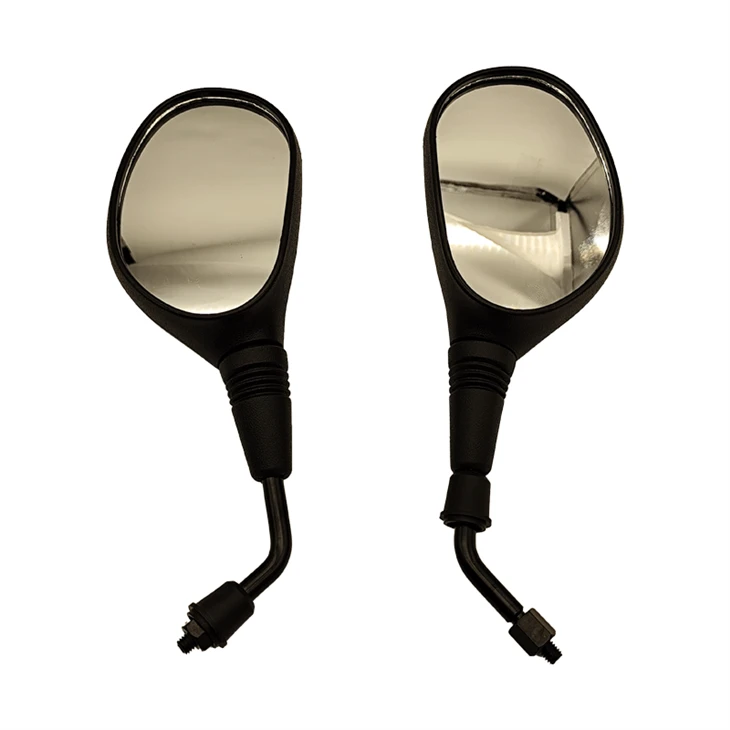
Moving across the pond to Europe, the rules are set by the European Union (EU). The EU has its own set of regulations, known as the Economic Commission for Europe (ECE) regulations. ECE R46 specifically deals with rearview mirrors. For cars, the regulations are similar to those in the U.S., with requirements for both inside and outside mirrors. The outside mirrors need to cover a certain viewing area, and they must be properly adjusted to provide a clear view. In addition, there are specific rules about the reflectivity of the mirrors to prevent glare. Also, many EU countries have regulations about the durability and strength of the mirrors, especially for vehicles that might be involved in more extreme driving conditions. Our Motorcycle Scooter Handlebar Rearview Mirror is designed to meet several of these European standards, ensuring a safe and reliable ride.
In Asia, different countries have their own unique regulations. For example, in Japan, the Japanese Industrial Standards (JIS) govern rearview mirrors. The JIS requirements focus on the quality and performance of the mirrors. They specify the minimum size of the mirror surface, the range of adjustment, and the clarity of the reflection. Japan also has strict regulations regarding the anti - fogging properties of mirrors, which is important considering the country's often humid climate. In contrast, in India, regulations are more focused on ensuring that the mirrors are properly installed and adjusted. The government has been working to improve road safety by enforcing these mirror regulations more strictly in recent years.
Now, let's talk about motorcycles. Motorcycle rearview mirrors are subject to their own set of regulations in various countries. In the U.S., motorcycles are required to have at least one rearview mirror that provides a clear view of the road behind. In Europe, ECE R81 sets the standards for motorcycle rearview mirrors. These regulations cover aspects such as the size of the mirror, the field of vision it provides, and the strength of the mounting. The mirrors must be able to withstand vibrations and minor impacts without breaking or losing their adjustment. Our Motorcycle Lightweight Rearview Mirror 168358 is a great option for motorcycle enthusiasts looking for mirrors that meet these European standards, while also being lightweight and stylish.
In Australia, the Australian Design Rules (ADR) apply to rearview mirrors. Similar to other countries, cars need both inside and outside rearview mirrors. The ADRs focus on the visibility requirements, ensuring that the driver can see a sufficient area behind the vehicle. There are also rules about the materials used in the mirrors to ensure durability. For trucks and buses, the regulations are even more stringent, as these larger vehicles require a wider field of view to safely navigate the roads.
In South America, different countries have different approaches to rearview mirror regulations. In Brazil, for example, the national traffic department has regulations regarding the installation and proper functioning of rearview mirrors in vehicles. These regulations aim to improve road safety and reduce the number of accidents caused by poor visibility. Argentina also has its own set of standards, which are similar in many ways to those in other countries but may have some unique local requirements.
It's not just about cars and motorcycles either. Commercial vehicles such as trucks and buses have their own sets of rearview mirror regulations. These large vehicles typically require multiple mirrors to cover all the blind spots. For instance, trucks often have convex mirrors on the sides to provide a wider view of the area next to the vehicle. Buses also have a complex system of mirrors to ensure that the driver can see pedestrians, cyclists, and other vehicles at all times.
As a rearview mirror supplier, it's crucial for me to stay up - to - date with these regulations in different countries. This allows me to offer products that meet the legal requirements of various markets. Whether you're a vehicle manufacturer, a dealer, or an individual looking to replace a damaged mirror, I've got you covered.
If you're interested in purchasing high - quality rearview mirrors that comply with the regulations in your country, don't hesitate to get in touch. I can provide you with detailed information about our products, their compliance with different standards, and offer competitive pricing. Let's start a conversation about your rearview mirror needs and find the perfect solution for you.
References:
- Federal Motor Vehicle Safety Standards (FMVSS) in the United States
- Economic Commission for Europe (ECE) regulations in Europe
- Japanese Industrial Standards (JIS) in Japan
- Australian Design Rules (ADR) in Australia
- National traffic department regulations in Brazil, Argentina, etc.


